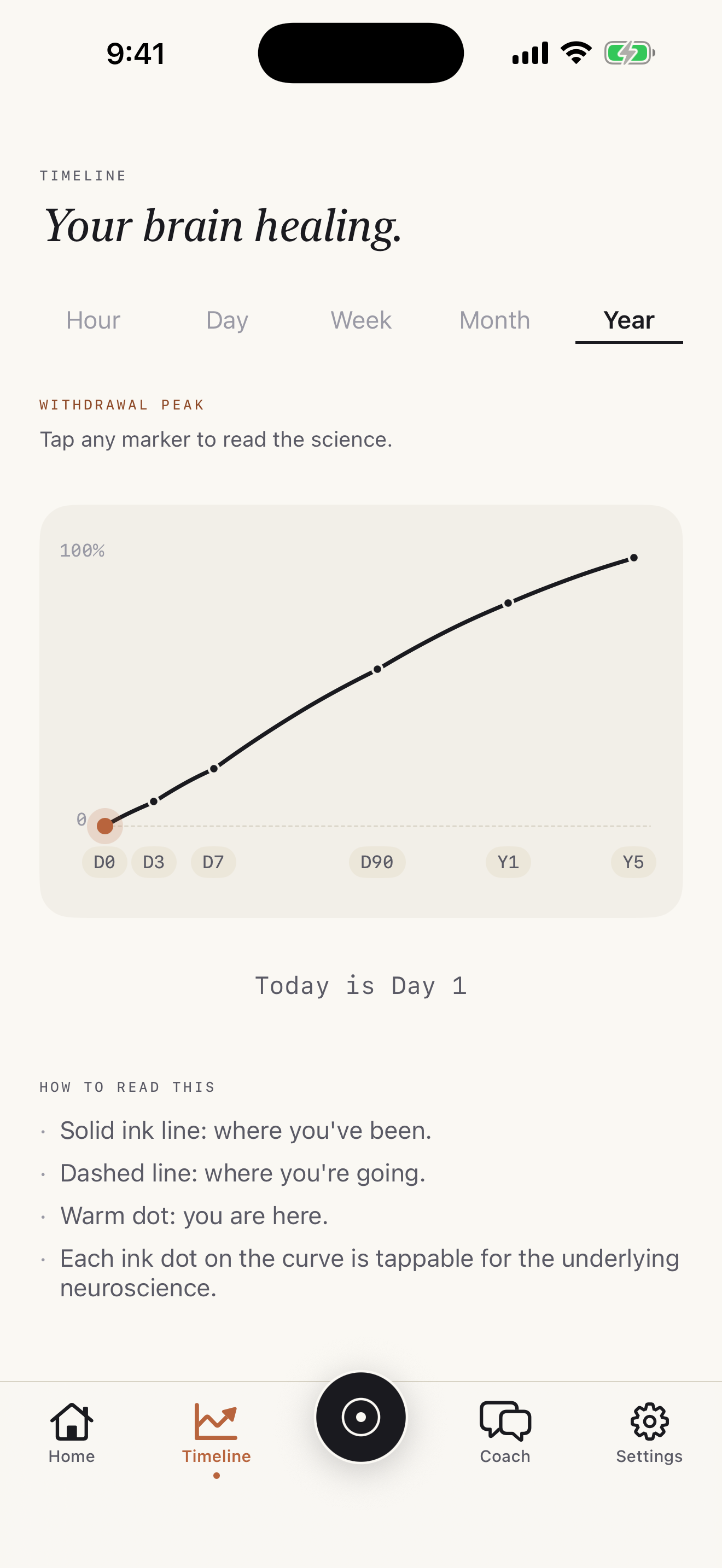
↑ Tap any milestone to read what's happening at that turn.
Day 0
The decision
The chemistry is already shifting. You can't feel it yet, but it's started.
Nicotine begins clearing the body within hours. The receptors it binds to — nAChR — drop their binding potential by about 33.5% in the first four hours.
Mild restlessness. The first urge to smoke.
nAChR binding potential SPECT imaging study
Day 3
Withdrawal peak
If you make it past Day 3, your odds change materially.
Nicotine has fully cleared the body. Withdrawal symptoms peak — irritability, broken sleep, sharp cravings.
The hardest stretch. Roughly half of all relapses happen in this window.
Day 7
Over the hump
The first week is the steepest. From here, the curve gets kinder.
Withdrawal symptoms begin a meaningful decline. Cravings get shorter; the gaps between them lengthen.
First real sense that this might actually work.
Day 90
Chemistry reset
Your reward system is no longer borrowing against the next cigarette.
Brain chemistry returns to non-smoker baseline. The reward-system recalibration is largely complete.
Natural pleasures — food, sleep, exercise — start to feel rewarding again.
Year 1
Heart risk halved
Heart-attack risk drops to roughly half of a smoker's baseline. Cardiovascular markers continue improving year over year.
Identity has shifted. This is who you are now.
Year 5
Statistical non-smoker
By every measure that matters, you are a non-smoker.
Continued structural healing; the prefrontal cortex thickens roughly 2% per year. Relapse risk drops to about 15% — statistically equivalent to people who never had the addiction.
Recovery is background, not foreground.